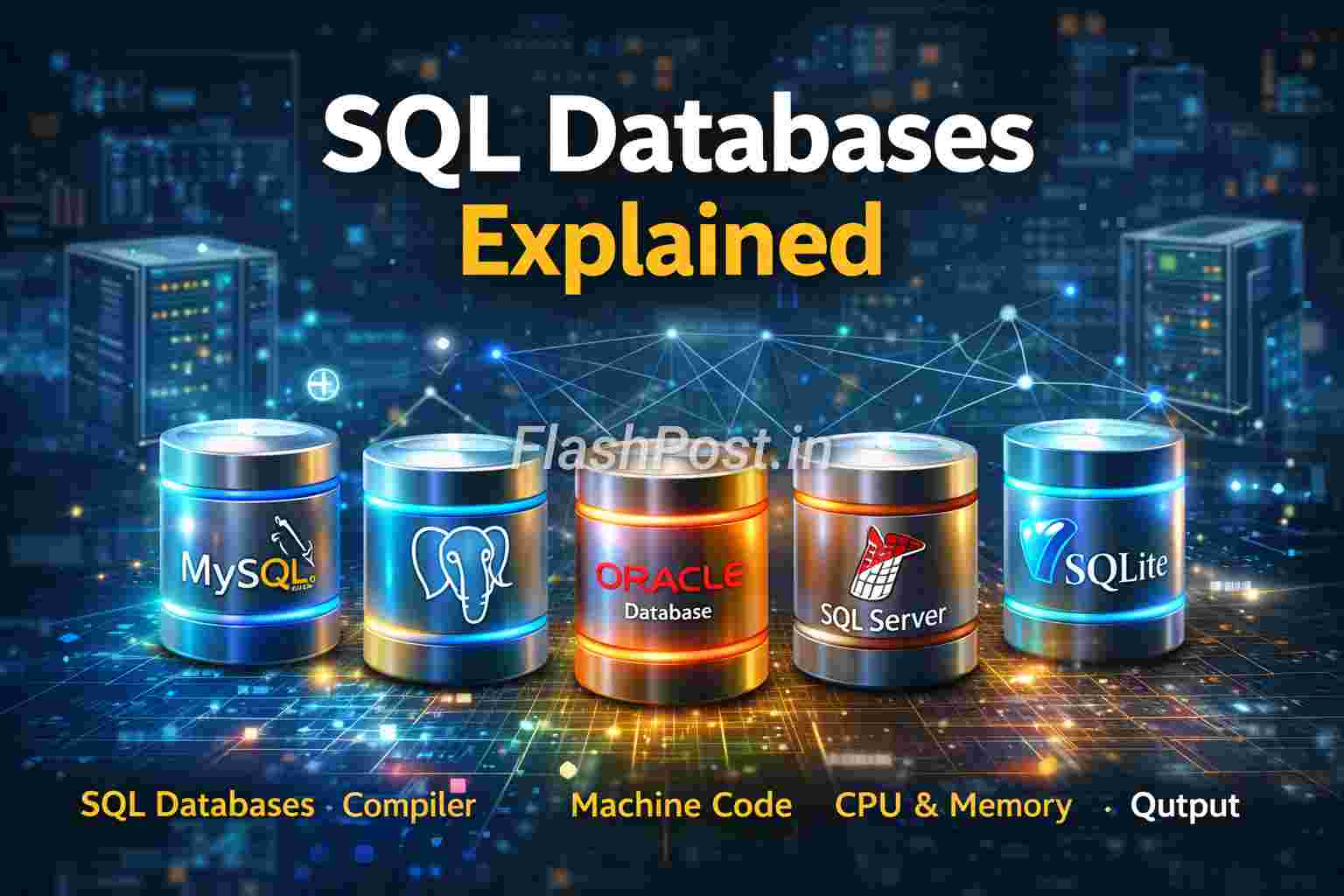
Hello dosto! Kya aapko pata hai ki aap jo bhi online karte hain – chahe wo social media ho, online shopping ho ya banking – uske peeche ek 'brain' hota hai jo saara data manage karta hai? Ji haan, hum baat kar rahe hain Databases ki! Aur inmein sabse important role play karte hain SQL Databases.
📑 Table of Contents
Aaj FlashPost par, hum aapko SQL databases ki duniya ki poori jaankari denge, bilkul simple aur engaging tarike se. Hum jaannege ki alag-alag SQL databases kya hain, kaise kaam karte hain, aur kahan use hote hain, saath hi unke official sources bhi mention karenge taaki aap further explore kar saken. Chalo, shuru karte hain is interesting safar ko!
SQL Databases Kya Hote Hain?
SQL ka full form hai Structured Query Language. Ye ek standard language hai jo relational databases mein data store, manage, aur retrieve karne ke liye use hoti hai. Relational databases mein data tables mein store hota hai, jo ek dusre se related hote hain (jaise ki Excel sheets, but more powerful!). Ye data consistency aur integrity maintain karne mein help karte hain.
Top SQL Databases aur Unki Jaankari
Chalo, ab dekhte hain kuch sabse popular SQL databases aur unki khaasiyatein:
1. MySQL
- Kya Hai: MySQL ek open-source relational database management system (RDBMS) hai jo Oracle Corporation develop aur support karta hai. Ye web applications ke liye bahut popular hai.
- Features:
- High performance aur reliability.
- Ease of use aur setup.
- Scalability for various workloads.
- Supports kai programming languages (PHP, Python, Java, Node.js, etc.).
- Use Cases:
- Web applications (WordPress, Drupal, Joomla).
- E-commerce websites.
- Data logging aur warehousing.
- Pros: Free aur open-source, large community support, bahut saare hosting providers isse support karte hain.
- Cons: Complex analytical queries ke liye kabhi-kabhi limited performance.
- Complete Information Source: Official MySQL Website
2. PostgreSQL
- Kya Hai: PostgreSQL ek advanced open-source object-relational database system (ORDBMS) hai jo uski reliability, feature robustness, aur performance ke liye jaana jata hai.
- Features:
- High extensibility (custom data types, functions).
- Data integrity aur concurrency control (MVCC).
- Supports complex data types (JSON, XML, arrays).
- Advanced indexing aur full-text search.
- Use Cases:
- Complex data operations.
- Geographical Information Systems (GIS) with PostGIS.
- Scientific data storage.
- Web services.
- Pros: Bahut powerful aur feature-rich, highly standards-compliant, open-source.
- Cons: MySQL se thoda zyada learning curve ho sakti hai.
- Complete Information Source: Official PostgreSQL Website
3. Oracle Database
- Kya Hai: Oracle Database world ka sabse widely used enterprise database hai, jo Oracle Corporation develop karta hai. Ye large-scale, mission-critical applications ke liye design kiya gaya hai.
- Features:
- High scalability aur availability.
- Robust security features.
- Advanced data analytics aur data warehousing capabilities.
- Comprehensive backup aur recovery options.
- Use Cases:
- Large enterprises aur financial institutions.
- Critical business applications (ERP, CRM).
- High-volume transaction processing.
- Pros: Extremely powerful, highly scalable, comprehensive features.
- Cons: Proprietary aur bahut expensive, complex to manage.
- Complete Information Source: Official Oracle Database Website
4. Microsoft SQL Server
- Kya Hai: Microsoft SQL Server Microsoft ka apna relational database management system (RDBMS) hai. Ye Microsoft ecosystem ke saath achhe se integrate hota hai.
- Features:
- Integrated with Windows Server aur .NET applications.
- Excellent Business Intelligence (BI) aur reporting tools.
- Strong security features.
- SQL Server Management Studio (SSMS) jaisa user-friendly GUI tools.
- Use Cases:
- Enterprise applications.
- Data warehousing aur BI solutions.
- .NET applications.
- Pros: Microsoft products ke saath excellent integration, strong BI capabilities.
- Cons: Proprietary aur costly (though free Express edition available), primarily Windows-centric.
- Complete Information Source: Official Microsoft SQL Server Website
5. SQLite
- Kya Hai: SQLite ek lightweight, serverless, aur self-contained relational database engine hai. Ye koi separate server process nahi chalata aur directly file-based hota hai.
- Features:
- Serverless: Koi separate server process nahi chalta.
- Zero-configuration: Setup ya administration ki zaroorat nahi.
- Self-contained: Single file mein poora database hota hai.
- Small footprint: Bohut kam memory aur disk space use karta hai.
- Use Cases:
- Mobile applications (Android, iOS).
- Embedded devices.
- Small desktop applications.
- Local data storage for web browsers.
- Pros: Extremely simple to use, no setup required, very fast for small data volumes.
- Cons: High concurrency aur network-based multi-user applications ke liye suitable nahi.
- Complete Information Source: Official SQLite Website
Toh dosto, yeh thi SQL databases ki duniya ki ek jhalak. Har database ki apni khaasiyat aur use case hai. Umeed hai, ab aapko alag-alag SQL databases ko samajhne mein aasani hogi aur aap apne project ke liye sahi database choose kar payenge. Agar aapko aur jaankari chahiye, toh diye gaye official sources ko explore karna mat bhoolna!
FAQs About SQL Databases
Yahan kuch commonly asked questions ke jawab diye gaye hain:
- 1. SQL aur NoSQL databases mein kya fark hai?
SQL databases relational hote hain, data tables mein store hota hai aur structured hota hai. Ye data integrity aur consistency par focus karte hain. NoSQL databases non-relational hote hain, jo flexibility provide karte hain aur unstructured data ke liye better hain (e.g., key-value, document, graph databases). Unka focus scalability aur availability par hota hai. - 2. Kon sa SQL database mere liye best hai?
Ye aapke project ki requirements par depend karta hai. Agar aap ek chhota web app ya personal project bana rahe hain, toh MySQL ya PostgreSQL achhe options hain. Large enterprise systems ya high-volume transactions ke liye Oracle ya SQL Server better ho sakte hain. Embedded use cases ya mobile apps ke liye SQLite ideal hai. - 3. Kya SQL seekhna mushkil hai?
SQL ki basic queries (SELECT, INSERT, UPDATE, DELETE) seekhna relatively easy hai aur aap jaldi hi data retrieve aur manipulate karna seekh sakte hain. Jaise-jaise aap complex operations, joins, subqueries, aur database management mein jaate hain, learning curve thodi badh sakti hai, but practice aur dedication se sab possible hai.



💬 Leave a Comment
Recent Comments
Be the first to comment!