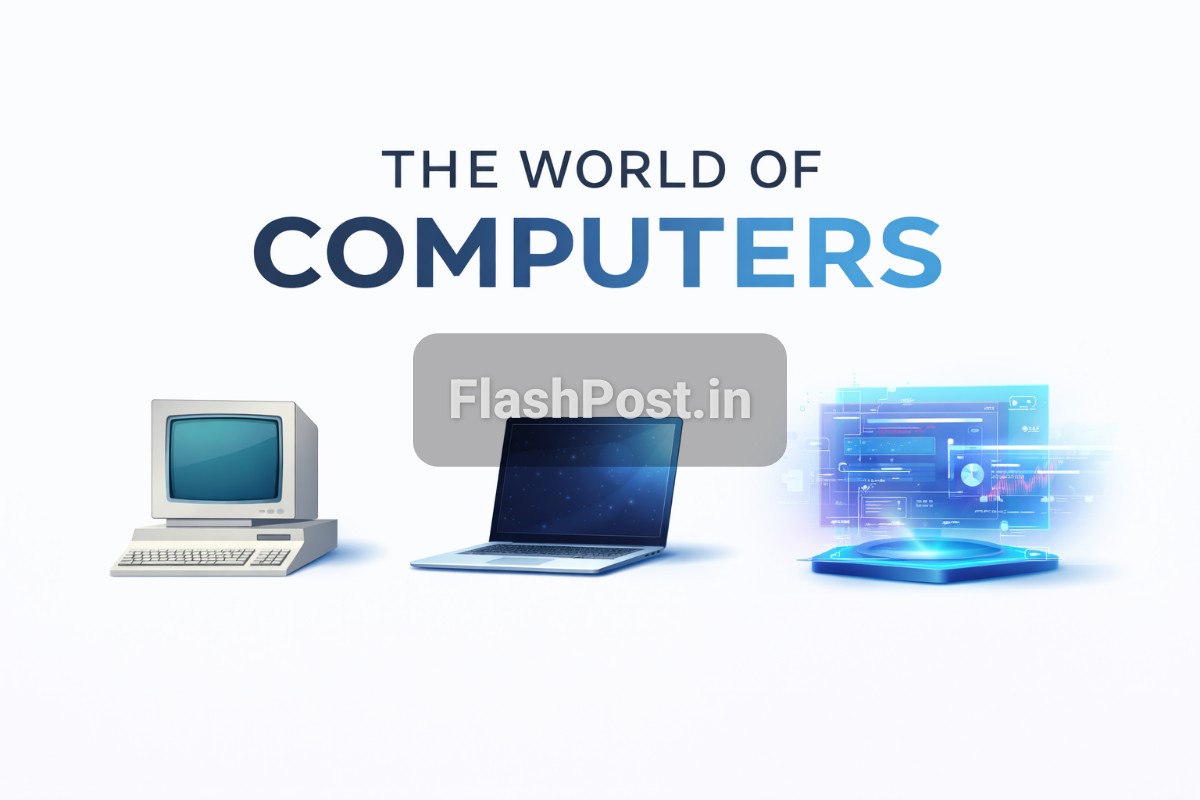
Computer Kya Hai? Ek Complete Guide
Kya aapne kabhi socha hai ki aapke haath mein jo smartphone hai ya saamne jo laptop hai, yeh sab kaise kaam karte hain? Computer humari modern duniya ka ek bahut hi important hissa ban chuka hai. Subah uthne se lekar raat ko sone tak, hum computers se ghira hua mahsus karte hain, chahe woh directly ho ya indirectly.
📑 Table of Contents
- Computer Kya Hai? Ek Complete Guide
- Computer Kya Hai? The Core Concept
- History & Background: Jahan Se Safar Shuru Hua
- How it Works / Core Concepts: Computer ki Andar ki Duniya
- Advantages & Disadvantages: Computer ki Doosri Side
- Real Life Example / Use Case: Har Jagah Computers!
- Desktop, Laptop, Aur Assembled Computer: Kya Farak Hai?
- Improvement: Past se Present Tak aur Aage Kya Hoga?
- Conclusion: Humari Zindagi Ka Anmol Hissa
- FAQs
- Sources
Dosto, is article mein hum baat karenge ki computer kya hai, iski shuruat kaise hui, aaj ke din yeh kitna important hai, aur future mein iski kya disha hogi. Hum desktop, laptop, aur assembled computers ke differences par bhi discuss karenge aur dekhenge ki pichle kuch saalon mein kitna improvement aaya hai. Toh chaliye, is exciting tech journey par nikalte hain!
Computer Kya Hai? The Core Concept
Ek computer basically ek electronic device hai jo data ko input ke roop mein leta hai, us data ko process karta hai, aur phir usse useful output ke roop mein provide karta hai. Iske saath hi, yeh data ko store bhi kar sakta hai taaki future mein use kiya ja sake.
Input, Process, Output, Storage: Computer ki Jaan
- Input: Aap keyboard se type karte hain, mouse se click karte hain, ya mic mein bolte hain. Yeh sab input hai jo computer ko milta hai.
- Processing: Computer ka "brain" (CPU – Central Processing Unit) is input ko samajhta hai aur us par calculations ya operations karta hai.
- Output: Jab processing ho jaati hai, toh computer aapko result dikhata hai – jaise screen par kuch display karna, printer se print nikalna, ya speakers se awaaz sunana.
- Storage: Computer information ko save kar sakta hai, jaise photos, videos, documents, ya software programs, taaki aap unhe baad mein access kar sakein (HDD ya SSD par).
Real world scenario mein dekha jaye toh, aapne Google par search kiya “FlashPost latest tech updates”. Yeh input hai. Google ke servers ne aapki query process ki, relevant results dhoondhe, aur aapki screen par display kiye – yeh output hai. Puri process mein data store bhi hota hai.
History & Background: Jahan Se Safar Shuru Hua
Computer ka safar bohot lamba aur fascinating raha hai. Aaj ke powerful computers tak pahunchne mein kai saalon ki mehnat aur innovation lagi hai.
Early Beginnings: From Abacus to Analytical Engine
Bhai, computer ka idea koi naya nahi hai. Counting aur calculations ke liye insaan ne hamesha tools banaye hain. Sabse pehla known calculation device Abacus tha, jo hazaron saal pehle use hota tha.
- 17th Century: Blaise Pascal ne ek mechanical calculator banaya, Pascaline.
- 19th Century: Yahan se modern computing ki asli neev rakhi gayi. British mathematician Charles Babbage ko "Father of the Computer" kaha jata hai. Unhone 'Difference Engine' aur phir 'Analytical Engine' design kiye. Ye machines physical gears aur levers se chalti thi aur programming concepts par based thi.
- Ada Lovelace, Charles Babbage ki collaborator, ko duniya ki pehli computer programmer mana jata hai kyunki unhone Analytical Engine ke liye algorithms likhe the.
Yeh image computer technology ke evolution ko darshata hai, early machines se modern devices tak.
20th Century: The Rise of Electronic Computing
Dosto, 20th century mein computer ne ek huge leap liya:
- 1940s: Pehle electronic digital computers jaise ENIAC (Electronic Numerical Integrator and Computer) develop huye. Yeh machines size mein bohot bade the (ek poora room bhar lete the!) aur vacuum tubes use karte the, jo bohot heat produce karte the aur frequent failures hote the.
- 1950s-60s: Transistors ne vacuum tubes ko replace kiya. Transistors chote, faster, aur more reliable the, jiski wajah se computers chote aur efficient ho gaye. IBM 700 series is era ke examples hain.
- 1970s: Integrated Circuits (ICs) aur phir Microprocessors ka invention ek game-changer tha. Ek single chip par hazaron transistors daal diye gaye. Intel 4004 pehla commercially available microprocessor tha. Isne personal computers (PCs) ke liye raasta khola.
- 1980s: IBM PC aur Apple Macintosh jaise machines market mein aaye, jo average logo ke liye accessible the. Graphical User Interfaces (GUIs) ne computers ko use karna aur bhi aasan bana diya.
- 1990s: Internet aur World Wide Web ke aane se computers ki importance aur bhi badh gayi. Communication aur information sharing revolutionize ho gaye.
How it Works / Core Concepts: Computer ki Andar ki Duniya
Aap soch rahe honge ki yeh complex machine itna kuch kaise kar leti hai? Har computer ke andar kuch fundamental components hote hain jo milkar kaam karte hain:
Hardware: The Physical Parts
- CPU (Central Processing Unit): Industry experts ke hisaab se, yeh computer ka brain hai. Saari calculations, instructions execution, aur logic yahi handle karta hai. Jitna powerful CPU, utna fast computer.
- RAM (Random Access Memory): Yeh computer ki short-term memory hai. Jab aap koi program chalate hain, toh woh RAM mein load hota hai. Jitni zyada RAM, utni zyada applications aap smoothly ek saath chala sakte hain.
- Storage (HDD/SSD): Yeh computer ki long-term memory hai. Aapka Operating System (OS), applications, files, photos, videos – sab yahi save hote hain. Aajkal SSDs (Solid State Drives) bohot common hain kyunki woh HDDs (Hard Disk Drives) se kaafi faster hote hain.
- Motherboard: Yeh ek circuit board hai jo computer ke saare components (CPU, RAM, GPU, storage) ko ek dusre se connect karta hai.
- GPU (Graphics Processing Unit): Yeh graphics aur visual processing ke liye specialized hota hai. Gamers aur graphic designers ke liye yeh bohot important hai.
- Input Devices: Keyboard, Mouse, Microphone, Webcam – jinse hum computer ko commands ya data dete hain.
- Output Devices: Monitor, Printer, Speakers – jinse computer humein results ya information deta hai.
Software: The Instructions
- Operating System (OS): Jaise Windows, macOS, Linux, Android, iOS. Yeh software hardware aur user ke beech ek bridge ki tarah kaam karta hai. Ye resources manage karta hai aur applications ko run karne ka environment provide karta hai.
- Applications/Programs: Specific tasks ke liye bane software, jaise Google Chrome (browser), Microsoft Word (document editor), Photoshop (image editor), ya koi game.
Binary Language: Computer ki Bhasha
Dosto, hum insaan jaise A, B, C ya Hindi mein baat karte hain, computer 0 aur 1 ki bhasha samajhta hai, jise Binary kehte hain. Har instruction, har data point, computer ke andar 0s aur 1s ke complex patterns mein convert hota hai.
Advantages & Disadvantages: Computer ki Doosri Side
Computer ke bohot saare fayde hain, jinhone humari life ko aasan banaya hai, lekin kuch nuksaan bhi hain jinhe samajhna zaroori hai.
Advantages (Fayde):
- Speed & Accuracy: Computers lakhon calculations seconds mein kar sakte hain, aur woh bhi bohot high accuracy ke saath.
- Huge Storage: Yeh bohot badi amount mein data store kar sakte hain, jise kabhi bhi access kiya ja sakta hai.
- Multitasking: Hum ek hi time par kai saare kaam kar sakte hain – music sunna, document type karna, aur internet browse karna, sab ek saath.
- Connectivity & Communication: Internet ke through hum puri duniya se jud sakte hain, email, video calls, aur social media se contact mein reh sakte hain.
- Automation: Kai repetitive tasks ko automate kiya ja sakta hai, jis se time aur effort bachata hai.
- Education & Information: Wikipedia, online courses, research papers – knowledge ka ek samundar ab humare fingertips par hai.
Disadvantages (Nuksaan):
- Cost: High-end computers aur software kaafi expensive ho sakte hain.
- Security Risks: Viruses, malware, hacking, data breaches – yeh sab computers se jude bade risks hain.
- Over-dependence: Hum computers par itne depend ho gaye hain ki agar woh fail ho jayein toh kaam ruk jata hai.
- Digital Divide: Har kisi ke paas computer ya internet access nahi hota, jis se ek inequality create hoti hai.
- Health Issues: Long hours tak computer use karne se aankhon par strain, posture problems, aur stress ho sakta hai.
- Obsolescence: Technology bohot tezi se change hoti hai, jis se hardware aur software jaldi purane ho jate hain.
Real Life Example / Use Case: Har Jagah Computers!
Aaj ke din computer sirf office ya tech geeks ke liye nahi hain, yeh har jagah hain:
- Education: Online classes, e-learning platforms, research, interactive simulations. Students ab best laptops for students choose karke apni padhai ko aur behtar bana sakte hain.
- Healthcare: Patient records, diagnostic imaging (X-rays, MRI), medical research, robotic surgeries.
- Entertainment: Gaming, streaming movies/music, social media.
- Business & Finance: Data analysis, accounting, online banking, stock trading, e-commerce websites.
- Communication: Emails, video calls, instant messaging, social media.
- Transportation: GPS navigation, self-driving cars, air traffic control.
- Science & Research: Complex simulations, data modelling, space exploration.
Yeh image ek futuristic AI-powered computer interface ko darshata hai, jahan technology hamare aas-paas har cheez ko integrate kar rahi hai.
Desktop, Laptop, Aur Assembled Computer: Kya Farak Hai?
Computer ek broad term hai, lekin iske kai forms hain jo alag-alag needs ke liye bane hain:
Desktop Computer: The Powerhouse
- Kya hai: Ek stationary computer jiske alag-alag parts hote hain – monitor, keyboard, mouse, CPU cabinet.
- Fayde: Generally zyada powerful hote hain, easily upgradable (parts change kar sakte hain), better cooling, aur performance ke liye cost-effective. Gamers aur heavy work ke liye ideal.
- Nuksaan: Portable nahi hote.
Laptop Computer: The Portable Partner
- Kya hai: Ek compact, all-in-one computer jisme monitor, keyboard, trackpad, aur CPU sab ek single unit mein integrated hote hain. Battery par bhi chalte hain.
- Fayde: Highly portable, kahin bhi le ja sakte hain. Students aur professionals ke liye perfect jo travel karte hain.
- Nuksaan: Desktops ke مقابلے mein kam upgradable, overheating issues ho sakte hain, aur same performance ke liye generally costly hote hain.
Assembled/Custom PC: Build Your Own Dream Machine
- Kya hai: Ek computer jise aap apne hisaab se parts choose karke banwate hain ya khud assemble karte hain.
- Fayde: Extreme flexibility (har component apni choice ka), best value for money for specific needs, maximum upgradability, aur future-proofing potential. Real world scenario mein, agar aapko ek specific graphics card ya processor chahiye, toh assembled PC best option hai.
- Nuksaan: Assembly knowledge chahiye hoti hai, troubleshooting mein time lag sakta hai, aur warranty alag-alag components ki alag hoti hai.
| Feature | Desktop PC | Laptop PC | Assembled PC |
|---|---|---|---|
| Portability | Low (Fixed) | High (Portable) | Low (Fixed, but parts can be transported) |
| Performance/Price | Excellent | Good | Outstanding (Custom-optimized) |
| Upgradeability | High | Low to Moderate | Very High |
| Cost (Initial) | Moderate | Moderate to High | Variable (Budget to High-end) |
| Ease of Setup | Moderate | High (Ready-to-use) | Low (Requires knowledge) |
Yeh table alag-alag computer types ke key features ko compare karta hai. Isse aap apni needs ke hisaab se best option choose kar sakte hain, jaise agar portability chahiye toh laptop, aur raw power ya specific customization chahiye toh assembled PC.
Improvement: Past se Present Tak aur Aage Kya Hoga?
Pichle kuch dashakon mein computers ne ek incredible transformation dekha hai:
Pichle se Aaj Tak (Past to Present):
- Size & Power: Vacuum tube wale room-sized machines se aaj ke pocket-sized smartphones tak, computers bohot chote aur kai guna zyada powerful ho gaye hain.
- Speed: Processing speeds GHz mein maapi jaati hain, aur applications seconds mein open hoti hain.
- Storage: MB se TB (Terabytes) tak pahunch gaye hain. Floppy disks se SSDs tak ka safar, data storage kaafi fast aur reliable ho gaya hai.
- Graphics: Simple text-based interfaces se hyper-realistic 3D graphics tak, visual experience revolutionary ho gaya hai.
- Connectivity: Dial-up modems se high-speed broadband, Wi-Fi 6, aur 5G tak, internet access ubiquitous ho gaya hai.
- Cost: Pehle computers sirf bade organizations afford kar sakte the, ab woh har aam aadmi ki reach mein hain.
Aage Kya Hoga (Future Developments):
Future mein computers aur bhi zyada integrated, intelligent, aur pervasive honge:
- Artificial Intelligence (AI) & Machine Learning (ML): AI har industry mein spread hoga, personal assistants se lekar healthcare aur autonomous vehicles tak. Computers khud se seekhenge aur decisions lenge.
- Quantum Computing: Industry experts ke hisaab se, yeh computing ka next frontier hai. Quantum computers complex problems solve kar payenge jo aaj ke supercomputers bhi nahi kar sakte, jaise drug discovery, advanced materials science, aur cryptography.
- Augmented Reality (AR) & Virtual Reality (VR): Immersive experiences aur bhi common ho jayenge. Hum digitally enhanced environments mein kaam karenge aur interact karenge.
- Internet of Things (IoT): Humare ghar, gaadiyan, aur appliances sab internet se connect honge, ek seamless smart ecosystem banayenge. FlashPost par aap smart home devices guide padh sakte hain.
- Edge Computing: Data processing devices ke kareeb hoga, latency kam karega aur real-time applications ko support karega.
- Brain-Computer Interfaces (BCI): Direct human thought se computers ko control karna shayad future mein possible hoga.
Conclusion: Humari Zindagi Ka Anmol Hissa
Dosto, computer ne insaniyat ke kaam karne, seekhne, aur interact karne ke tareekon ko completely badal diya hai. Charles Babbage ke Analytical Engine se lekar aaj ke AI-powered supercomputers tak, yeh safar sirf shuruat hai.
Aaj ke din computer sirf ek tool nahi hai, yeh humari creativity, innovation, aur connectivity ka ek extension hai. Chahe woh desktop ho, laptop ho, ya ek custom-built machine, har computer humein ek alag duniya explore karne ka mauka deta hai. Aane wale waqt mein, computer technology aur bhi zyada mind-blowing innovations layegi, jo humare daily life ko aur bhi seamless aur efficient bana degi.
Toh next time jab aap apna computer use karein, toh yaad rakhna ki aap ek incredible technological evolution ka hissa hain!
FAQs
- Sabse pehla electronic digital computer kaun sa tha?
Pehla electronic digital computer ENIAC (Electronic Numerical Integrator and Computer) tha, jo 1940s mein bana tha. - Computer ke main hardware parts kya hain?
Computer ke main hardware parts CPU, RAM, Storage (HDD/SSD), Motherboard, GPU, Keyboard, Mouse, aur Monitor hain. - Laptop aur Desktop computer mein kya primary difference hai?
Laptop portable hote hain aur all-in-one unit mein aate hain, jabki Desktop computer stationary hote hain jismein components alag-alag hote hain aur woh generally zyada powerful aur upgradable hote hain. - Assembled PC ke kya fayde hain?
Assembled PC ke fayde hain maximum customization, best performance-to-price ratio for specific needs, aur high upgradability. - Aage computers mein kya naye developments aayenge?
Future mein AI aur Machine Learning ka aur integration, Quantum Computing, Augmented/Virtual Reality, Internet of Things, aur Brain-Computer Interfaces jaise developments dekhne ko milenge.
Sources
- Wikipedia: History of computing
- Techopedia: What is a Computer?
- IBM History: Early Computing (for Babbage/Lovelace context)
About Author: Yogesh
Yogesh is a passionate tech blogger who writes about networking, technology, and software guides in simple language. Read more helpful tech guides on FlashPost.in.
💬 Leave a Comment
Recent Comments
Be the first to comment!